How To Organise Wash Mitts Brushes And Towels Between Car Cleaning Sessions
A practical step-by-step guide to how to organise wash mitts brushes and towels between car-cleaning sessions, including preparation, instructions, common issues, tips, and next steps.
How To Organise Wash Mitts Brushes And Towels Between Car Cleaning Sessions
This guide explains how to organise wash mitts, brushes, and towels between car-cleaning sessions so that they stay hygienic, last longer, and perform well every time you detail your vehicle. Proper organisation involves immediate post-use care, a dedicated drying and storage system, seasonal checks, and a simple labelling method to avoid cross-contamination. By following the structured routine described here, you will always have clean, dry, and ready-to-use tools without the hassle of tangled hoses or mildew-smelling towels.
Fast Answer
- Rinse every mitt, brush, and towel immediately after use to remove dirt and soap, then hang them to dry completely before storing in a ventilated container.
- Keep separate containers for wheels, paint, and glass tools to avoid cross-contamination, and label each bin clearly to save time during your next session.
Before You Start
- Gather a large bucket or basin, a gentle automotive shampoo, a grit guard, and a dedicated rinse hose or spray nozzle for the post-cleaning wash.
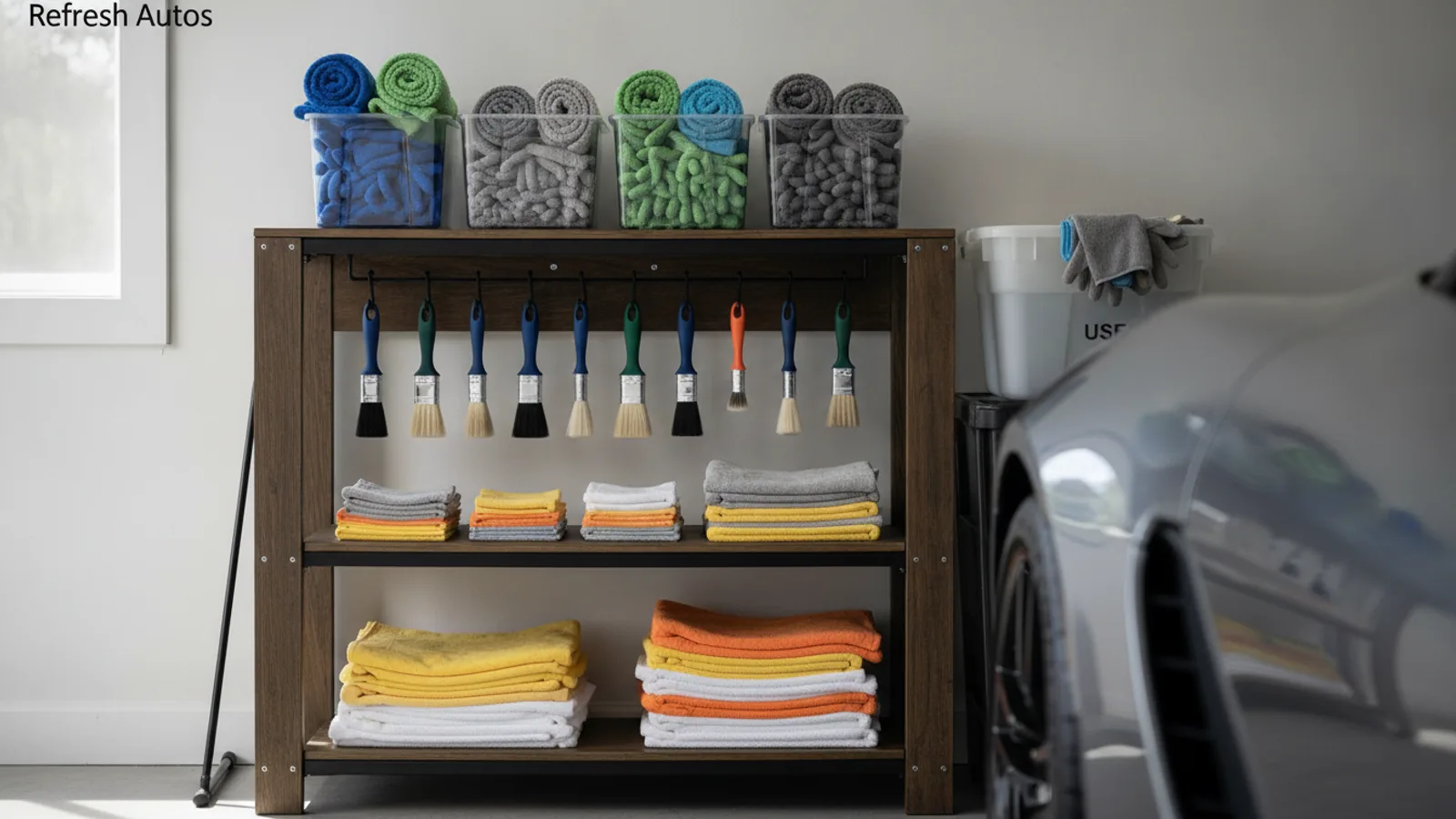
- Choose three labelled storage bins with lids that have ventilation holes, one each for wheels, paint, and glass or interior tools.
- Get a drying rack or a retractable clothesline in a shaded, dry area where you can hang wet mitts and towels without them touching the ground.
- Acquire a small notebook or a set of waterproof labels to record your cleaning dates and any worn-out tools that need replacement.
Step-by-Step Instructions
Rinse Tools Immediately After Use
As soon as you finish washing your car, before the soap dries, take every wash mitt, brush, and towel to a rinse station. Use a strong stream of clean water, either from a hose or a filled bucket, and work the water through each mitt and brush to dislodge trapped dirt and soap residue. For towels, wring them out gently to remove excess water, then run them under the stream for a few seconds. This immediate rinse prevents abrasive particles from embedding into the fibres, which can scratch your paint on the next use. A practical check is to wring each mitt until the water runs clear, not soapy or dirty. This matters because leftover soap can degrade the fibres and leave a film, and embedded grit turns a soft wash mitt into sandpaper. Rinsing now keeps your tools safe and reduces the effort needed later.
Wash With a Dedicated Cleaning Solution
After rinsing, fill a clean bucket with warm water and a small amount of automotive-specific detergent, or a mild soap that is safe for the materials. Submerge each mitt, brush, and towel and agitate them for at least a minute, squeezing and releasing to work the solution into the fibres. Pay special attention to any stained areas on towels, and use a soft brush to scrub stubborn spots on your wash mitts. After cleaning, empty the bucket and refill it with fresh water for a thorough rinse, repeating until the water is clear. This step removes all remaining soap and contaminants that the initial rinse missed. Check that no suds remain when you squeeze each item, because detergent residue can break down the nap of microfiber and reduce its absorbency. A clean tool is essential for a swirl-free finish on your car's paint.
Dry Tools Thoroughly Before Storage
Squeeze out as much water as possible from each item, then lay them flat or hang them on a drying rack in a well-ventilated area, away from direct sunlight. For wash mitts and brushes, turn them so the bristles or fibres face downward to encourage water to drain. For microfiber towels, hang them by a corner or spread them out, ensuring they do not overlap. Wait until every item is completely dry to the touch both inside and out, which may take several hours depending on humidity. A practical check is to pinch a small section of each towel after a few hours; if any moisture remains, leave them longer. Complete drying is crucial because even a small amount of trapped moisture can create a breeding ground for mildew, which will ruin the equipment and transfer musty odours to your vehicle's interior.
Sort and Store in Dedicated Containers
Once everything is dry, sort each item into your labelled containers: one for wheels, one for car paint, and one for glass or interior surfaces. Fold or roll towels to fit snugly, but avoid overpacking. Place brushes with the bristles facing upward or on their side, so they don't bend out of shape. Put the lids on, but ensure the ventilation holes are open. Store the containers in a cool, dry place, such as a shelf in the garage or an interior closet, away from direct heat, chemicals, or strong odours. A practical check is to verify that each container is not airtight and that the lids close securely. This separation prevents cross-contamination, meaning you won't use a wheel brush on your paint and accidentally transfer brake dust and grit. It also saves you time because you can grab the right container without thinking.
Implement a Labelling and Rotation System
Create a simple labelling system where you mark each container with the date of the last deep clean and a rough "next use" reminder. For example, after a major session, write the date on a piece of masking tape and stick it to the lid. When you store a tool, rotate the stack so you always pick the oldest item first, ensuring even wear. Additionally, keep a small notebook where you note any tool that seems worn, torn, or losing its pile, and indicate whether it needs replacement or deeper cleaning. A practical check is to review your labels before each cleaning session and swap out any tool that looks tired. This system prolongs the life of your gear and ensures that every mitt, brush, or towel is effective when you need it, without guessing which one is freshest.
Perform Weekly Maintenance and Inspect for Damage
Set aside a short time each week to inspect your stored tools. Open each container, give a quick sniff to detect any mildew or mustiness, and run your fingers through each mitt and brush to feel for grit or clumping. For towels, check for stains or tears that could scratch the paint. If you find any tool that is going bad, address it right away by deep-cleaning it again or retiring it. Also, flatten and turn the contents of each container to allow air to circulate, preventing any damp spots. A practical check is to hold each brush upside down and shake it; if debris falls out, it needs another rinse. This weekly routine takes only a few minutes but catches problems early, saving you from a ruined washing session and potential damage to your car's finish. It also keeps your kit organised so you can enjoy cleaning your car without surprises.
Quick Reference
| Situation | Action | Why it helps |
|---|---|---|
| After using a wash mitt or brush to clean dirty wheels or tyres. | Rinse it thoroughly with a separate water bucket, then place it directly into the designated wheels-only bin, not with paint tools. | Brake dust and grit from wheels are highly abrasive, so separating them prevents scratching your car's paint during future washes. |
| You notice an unpleasant smell coming from a previously stored microfiber towel. | Remove it immediately, soak it in a vinegar-and-water solution for an hour, then wash it with a gentle detergent and dry completely before returning it to the bin. | Mildew grows in damp fibres and causes odours; vinegar kills the mildew without leaving harsh residues that can damage paint. |
| Before a weekend car-detailing session, you want to confirm your tools are ready. | Open each storage bin, smell for dampness, and touch every towel and mitt to ensure they are completely dry, fluffing them to restore the pile. | Damp or compressed tools reduce absorbency and can introduce moisture and dirt to your car's surface, leading to streaks and potential marks. |
Common Issues
- Mitt or towel smells musty even after drying.: Soak the affected item in a solution of one part white vinegar to three parts water for 30 minutes, then rinse thoroughly and wash with a mild detergent, and air-dry completely before storing again.
- Brushes are shedding bristles or losing shape.: Replace the brush if shedding is severe, but for minor distortion, soak the bristles in warm soapy water, reshape them with your hands, and hold them in place while drying by tying a loose elastic band around the bristles.
- Particles of dirt are sticking to a wash mitt.: Do a deep clean by soaking the mitt in a bucket of warm water with a gentle automotive shampoo and agitate vigorously for several minutes, then rinse repeatedly with clean water and dry in a shaded, airy spot.
Advanced Tips
- To extend the life of microfiber towels, add a second rinse cycle when washing them at home and never mix them with lint-producing cotton items.
- Keep a small spray bottle of isopropyl alcohol diluted with water near your storage area; a quick mist on a towel before use helps to loosen stubborn residues.
- During long-term storage, such as winter months, place a desiccant pack in each bin and check monthly; replace or recharge the pack as directed.
Final Checklist
- Rinse every tool immediately after use to remove dirt and soap, checking that the water runs clear.
- Wash mitts, brushes, and towels with a gentle automotive detergent, then rinse them thoroughly until no suds remain.
- Dry every item completely, in a ventilated, shaded area, ensuring there is no moisture inside or on the surface.
- Store each tool in a labelled, ventilated container assigned to its specific purpose, and inspect all tools weekly for signs of wear or mildew.
FAQ
How often should I deep-clean my wash mitts and towels?
Deep-clean them after every major car-washing session, or every few uses if you wash weekly, because they pick up oils, road grime, and old wax that can reduce their effectiveness. Always follow the care instructions on the label, as different materials have different limits.
Can I store all my car cleaning tools in one large bucket?
While it is possible, it is not recommended because mixing tools for different surfaces can transfer contaminants, and crowding can prevent proper air circulation, risking mildew. Use separate, labelled containers for wheels, paint, and interior or glass.
What is the best way to dry microfiber towels to keep them soft?
Air-dry them on a rack or clothesline in a well-ventilated area, out of direct sunlight. You can also tumble dry on no heat or low heat with a dryer sheet-free cycle, but air-drying preserves the pile the best and avoids any residual heat damage.